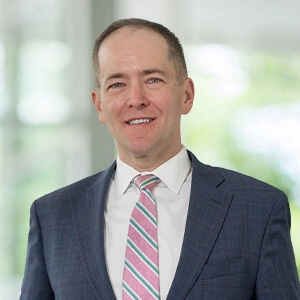
The election of Zohran Mamdani as the 111th Mayor of New York City made headlines in 2025, in large part because of the ambitious, populist platform that animated his campaign. The question of how he would turn campaign rhetoric into policy has been front of mind for many New Yorkers and companies doing business in New York City. In the weeks leading up to and following his inauguration, it has become clear that a major conduit of Mayor Mamdani’s agenda will be the New York City Department of Consumer and Worker Protection (DCWP) and its new Commissioner, Samuel Levine.
Days after his election, Mamdani announced that the co-chair of his transition team would be former Federal Trade Commission (FTC) Chair Lina Khan. The appointment of Khan to this role is a strong signal that economic populism will be a central component of his administration. While at the FTC, Khan sent shock waves through industries with her enforcement of antitrust laws and pro-consumer rulemakings, including rules that banned non-compete clauses and junk fees. While not all of these rules survived judicial scrutiny, Khan’s credibility as an economic populist is unimpeachable, and she even received vocal praise from Republican populists such as Senator Josh Hawley for her pro-consumer enforcement of antitrust laws. The former Director of the FTC Bureau of Consumer Protection who advanced many of Khan’s goals was Samuel Levine.
On December 22, 2025, Mayor-elect Mamdani announced that he was appointing Levine as the Commissioner of DCWP. Prior to serving as FTC Director of the Bureau of Consumer Protection, Levine served as an attorney-advisor for then-FTC Commissioner Rohit Chopra and previously served as an attorney in the Illinois Attorney General’s Office, where he focused on enforcement matters and rulemakings involving affordability of higher education. While serving under Khan, Levine took a leading role on enforcement actions and rulemakings involving “privacy, data security, marketing, financial services, digital advertising, consumer reporting, algorithmic decision-making, and small business financing.”[1] Levine also developed a reputation as a visionary leader with a keen ability to maximize performance of the FTC career workforce.
In his new role at DCWP, Levine will have the opportunity to advance some of the same policies he focused on while at FTC. While DCWP may not be a household name to all New Yorkers, its authorities impact almost every business in New York. DCWP “licenses more than 45,000 businesses in over 45 industries and enforces key consumer protection and workplace laws that apply to countless more.”[2] DCWP also includes in its mission “protect[ing] the marketplace from predatory practices and striv[ing] to create a culture of compliance.” DCWP rulemaking has a notice and comment period similar to FTC rulemaking. DCWP can also conduct investigations into violations of its rules and bring enforcement actions through the NYC Office of Administrative Trials and Hearings (OATH).
Mayor Mamdani has begun to announce task forces aimed at advancing his agenda, and Commissioner Levine and DCWP are front and center in these efforts. On January 4, 2026, Mayor Mamdani issued Executive Order 08, “Protecting Tenants from Rental Ripoffs and Abusive Landlord Practices,” which will create a series of hearings led by the Mayor’s office and four city departments, including DCWP.[3] The order calls for at least one hearing in each of the five boroughs within 100 days of the order at which tenants and tenant-advocacy organizations will testify, and the departments, including DCWP, must issue a public report within 90 days of the last hearing. Speaking at a press conference, Commissioner Levine indicated his support for this effort: “Amid an affordability crisis crushing millions of working New Yorkers, tenants are being burdened by excessive and hidden fees — from amenity fees to processing fees. This administration will make sure every New Yorker knows their rights and knows they have a champion in city government who will not back down from the fight to make this city more affordable, fair, and just.”[4]
On January 5, 2026, Mayor Mamdani announced that the city would also take a page out of the FTC’s book and regulate or eliminate consumer junk fees and “hard-to-cancel” subscriptions. What Mayor Mamdani refers to as “junk fees” includes a collection of fees charged to consumers labeled as service fees, convenience fees, processing fees, and so forth. Speaking at the press conference announcing this effort, Commissioner Levine called out national companies doing business in New York City: “Ripping off the people of the city has become a business model for too many companies, . . . don’t wait for a subpoena, do right by your customers today.”[5] In the accompanying press release, Commissioner Levine promised to use DCWP’s full rulemaking authority to target companies “that pad prices with hidden fees,” specifically singling out “gyms” and “apps.”[6] He further promised “aggressive enforcement” and “close coordination with partner agencies.”
The Mamdani administration’s focus on “app delivery companies” was clear at a recent press conference, at which Commissioner Levine stated interest in whether “delivery companies [are] making it impossible for deliveristas to actually earn pay because they’re setting such high volume quotas that deliveristas [are] putting people’s safety at risk, and people are having to choose between their livelihood and their safety.”[7] He indicated that he plans to have conversations with app companies regarding these issues.
These are the early days of the Mamdani administration, but DCWP and Commissioner Levine are emerging as early key players. Individuals and companies doing business in New York City would be well served to pay close attention to NYC Rules and to review and comment on DCWP regulatory proposals. Moreover, proactive engagement with DCWP to ensure business practices are compliant with regulations can also reduce the risk of DCWP investigations or enforcement matters.
Our team has valuable experience with these issues and DCWP. We are available to help.
Case results depend upon a variety of factors unique to each case. Case results do not guarantee or predict a similar result in any future case. Unless otherwise noted, attorneys are not certified by the Texas Board of Legal Specialization.
[1] https://www.ftc.gov/about-ftc/commissioners-staff/samuel-levine.
[2] https://www.nyc.gov/site/dca/about/overview.page.
[3] https://www.nyc.gov/mayors-office/news/2026/01/executive-order-08.
[4] https://www.nyc.gov/mayors-office/news/2026/01/mayor-mamdani-appoints-dina-levy-as-housing-commissioner--announ.
[5] https://lavocedinewyork.com/en/new-york/2026/01/05/mamdani-announces-push-to-go-after-junk-fees-and-hard-to-cancel-subscriptions/.
[6] Statement from DCWP on Mayor Mamdani’s Executive Orders to Combat Junk Fees and Subscription Traps | City of New York.
[7] Mamdani Commissioner Pledges to Hold App Companies Accountable for Road Safety - Streetsblog New York City.