
It can be tempting for colleges and universities to treat insurance renewals as a routine administrative task, especially if loss experience has been good, or the institution has maintained the same coverage structure for years. But insurance is not simply a purchasing question. It is a risk management decision that requires broad assessment to ensure that coverage still aligns with current operations, emerging exposures, and institutional priorities. Below are questions for institutions to consider at and before their annual insurance renewal periods:
Has the institution’s risk profile changed since the last renewal period? Colleges and universities should consider developments in student life, athletics, housing, international programs, technology, cybersecurity and privacy, campus-sponsored events, employment practices, construction, and international and political risk. Even modest operational changes can affect coverage needs, exclusions, notice obligations, or deductibles. Institutions should also review claims and “near misses” from the prior year to identify patterns that may warrant an assessment as to whether coverage matches needs. Renewal discussions are more effective when grounded in actual experience rather than assumptions that existing coverage remains sufficient.
Do the institution’s risk managers fully understand the terms of the coverage they are renewing? Limits and premiums matter, but so do definitions, exclusions, sublimits, reporting requirements, and the mechanics of making a claim. Colleges and universities should review policies covering general liability, educators’ legal liability, employment practices, sexual misconduct claims, property losses, cyber incidents, and participant-related activities. Institutions should pay particular attention to whether artificial intelligence-related exposures are adequately addressed and, if so, how they are defined in the policy. As artificial intelligence (AI) becomes increasingly ubiquitous in commercial applications, the ability to distinguish between a loss that is, or is not related to AI becomes increasingly difficult. In addition, AI incidents may fall into gaps between traditional cyber and professional liability policies, and many policies now include exclusions for losses arising from autonomous AI decision-making without human review. Insurers are increasingly treating documented AI governance policies as a factor in underwriting decisions, making institutional AI governance frameworks relevant not only as a compliance matter but also as a coverage consideration. Institutions should also confirm that their policies adequately address diversity, equity, and inclusion (DEI)-related claims, which have recently become a source of new coverage disputes as federal enforcement in that area has intensified. If different offices assume a risk is covered without confirming the policy language, the institution may discover too late that an important exposure falls outside the expected protection.
Does the institution’s internal coordination around insurance-related issues need to improve? The proverb, “it takes a village”, is particularly apt when it comes to institutional risk management. Risk, legal, finance, facilities, student affairs, athletics, and information security each hold information critical to evaluating loss exposure and determining appropriate coverage. Communication across key stakeholders allows institutions to better assess critical exposures, retained risk, incident reporting, contractual insurance requirements, and vendor coverage, among other things. Vendor risk management deserves particular attention during renewal reviews. Institutions rely on a large number of third-party platforms and service providers, and underwriters increasingly evaluate the risk profile of an institution’s broader vendor ecosystem, not just its internal systems. Contractual insurance requirements, indemnification provisions, and cybersecurity standards should be reviewed as part of any renewal process.
Insurance should support, not replace, sound institutional planning. By approaching renewal as a strategic review rather than a routine transaction, colleges and universities can better understand their risks, their protections, and where added attention may be needed before a claim is made. Hunton’s higher education team works closely with Hunton’s insurance coverage team to advise higher education clients on legal issues related to their insurance coverage. If you would like to discuss how we can assist, please contact Gerry Leone, Amy Fabiano, or Brigid Harrington (higher ed) or Michael S. Levine, Michael Perry, or Geoffry B. Fehling (insurance).
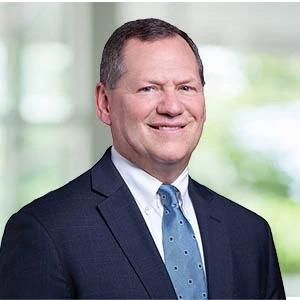 Special Counsel
Gerry is co-head of Hunton’s higher education and private schools practice and a collaborative team leader with broad-based public, governmental, and private practice experience, including in niche special situations that ...
 Senior Attorney
Amy is a skilled higher education attorney and member of the firm’s higher education and private schools and labor and employment teams. With a particular focus on education law, she counsels clients on complex legal and ...
 Senior Attorney
With a focus on civil rights compliance for higher education institutions, Brigid is a member of the firm’s higher education and private schools and labor and employment teams. She has extensive experience in Title VI, Title VII ...
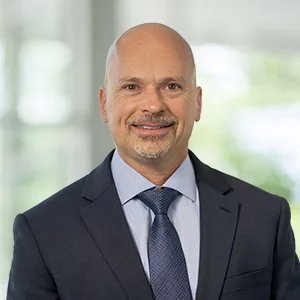 Partner
Mike is a Legal 500 and Chambers USA-ranked lawyer with more than 25 years of experience litigating insurance disputes and advising clients on insurance coverage matters.
Mike Levine is a partner in the firm’s Washington, DC ...
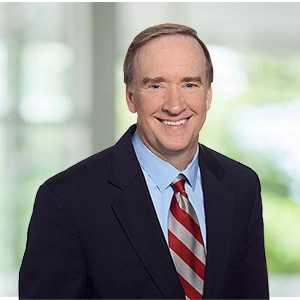 Partner
Michael is an active trial lawyer with more than 25 years of experience trying cases in state and federal court and before arbitration panels. Michael regularly represents corporate and individual clients in business disputes ...
 Partner
Geoff works closely with corporate policyholders and their directors and officers to resolve high-stakes insurance disputes. He leads the firm’s directors and officers (D&O) insurance and executive protection practice.
As a ...
Search
Recent Posts
Categories
Tags
- Accommodations
- Accreditation
- ADA
- Admissions and Consumer Transparency Supplement (ACTS)
- Americans with Disabilities Act (ADA)
- Appeals
- Campus Event Safety
- Campus Police
- Campus Risk Playbook Series
- Civil Rights
- Class Actions
- Clery Act
- College Sports Commission (CSC)
- Colleges
- Compliance
- COVID-19
- DEI
- Department of Education (ED)
- Department of Homeland Security (DHS)
- Department of Justice (DOJ)
- Department of State (DOS)
- Disability Accommodations
- Disparate-Impact Liability
- Educators Legal Liability
- EEOC
- Employee Handbooks
- Executive Order (EO)
- F-1 Student Visa
- F-1 Visa
- False Claims Act
- First Amendment
- Fourth Circuit
- Free Speech
- Freedom of Speech
- FSA
- Government Agencies
- Greenwashing
- Hazing
- Higher Education
- Immigration
- Immigration & Customs Enforcement (ICE)
- Insurance
- Integrated Postsecondary Education Data System (IPEDS)
- Investigations
- Liability Insurance
- Massachusetts
- Mergers and Acquisitions (M&A)
- Minor Students
- Name, Image, Likeness (NIL)
- National Collegiate Athletic Association (NCAA)
- New Jersey
- OBBB
- Office for Civil Rights (OCR)
- Policy Renewals
- Pregnancy-Related Accommodations
- Presidential Memorandum
- Protest
- Reduction in Force (RIF)
- Section 117
- Sexual Harassment
- Sovereign Immunity
- State Law
- Summer Brief
- Supreme Court of the United States (SCOTUS)
- Sustainability
- Title IV
- Title IX
- Title VI
- Webinar
Authors
Archives

Related Insights
- 8 Minute ReadLegal Update
- 11 Minute ReadLegal Update
- 3 Minute Read